The cultural heritage of Sicily is made up of countless extraordinary masterpieces. One of these is represented by the great tradition of the Sicilian puppet masters and puppets, known throughout the world.
The Sicilian Pupi, the characteristic puppets of the tradition, give life to the so-called Opera dei Pupi: A representation of the exploits of the heroes who fought in the Middle Ages to defend Christianity from the Saracen threat. The most represented theme, in fact, is that of the clash between the paladins of Charlemagne against the Muslim Knights.

The puppets are marionettes that wear metal armor, hold a sword and, of course, are cleverly moved by the master puppeteer thanks to wires and metal rods.
Originally, the puppets – made mainly in Palermo and Catania – were quite big and could reach one metre and thirty, and a weight up to 13 kilos. This art suffered a significant decline after the 1950s, because of the triumph of cinema and television, and had a comeback in the 70s, thanks to the commitment of the last families of the Sicilian puppet masters who were still active. In 1975, in fact, the International Museum of Marionette was born, in Palermo, and – since 2001 – the art of Sicilian Puppeteers has become a Cultural heritage of mankind for UNESCO.
Francesco Salamanca: one of the best Sicilian puppet masters
Born in 1955 in Catania, Francesco Salamanca began to devote himself to puppets and their construction when he was 13 years old. He entered the laboratory of one of the historical Sicilian puppet masters, Emilio Musumeci, and was able to learn the earliest constructive techniques of Sicilian puppets. From the 80s, Francesco Salamanca left the family business, founding his own workshop together with his wife Angioletta Cavallaro.
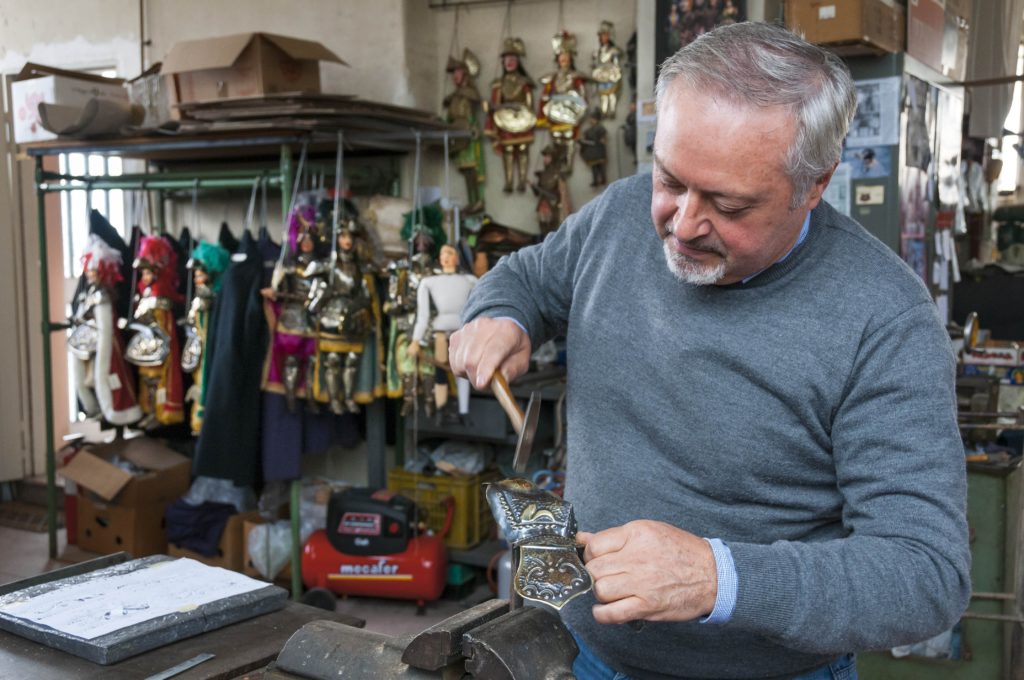
Image source: SicilyMag
The puppeteer work carried out by Salamanca has been a great success, testified by the participation in important crafts fairs throughout the Italian territory, and by numerous recognitions. Over time, he has created a collection of 65 Sicilian puppets for the ship “Costa Magica” of Costa Cruises, which is represented in a dedicated monography by the prestigious publishing house Franco Maria Ricci (better known as FMR). In more recent times, Francesco Salamanca exhibited at the Italian Expo in Huston, and won the Cavaliere Isidoro Platania Award for his career as a master craftsman. In 2015, then, on the occasion of his fiftieth birthday, he was invited to the Eataly store in Dubai to exhibit his collection of puppets.
Francesco profoundly represents all the knowledge and mastery of the ancient techniques of puppet construction, and is also a skilled restorer of these beautiful puppets. In addition, he founded the cultural Association Arte e Pupi, thanks to which he organizes events involving the most important master craftsmen in Sicily.
The Napoli brothers: Sicilian puppet masters themselves
In Catania, another couple of successful Sicilian puppet masters is the Napoli brothers, whose workshop is an absolute reference point for the ancient art of Sicilian puppets, thanks to an experience of four generations of Puppeteers.
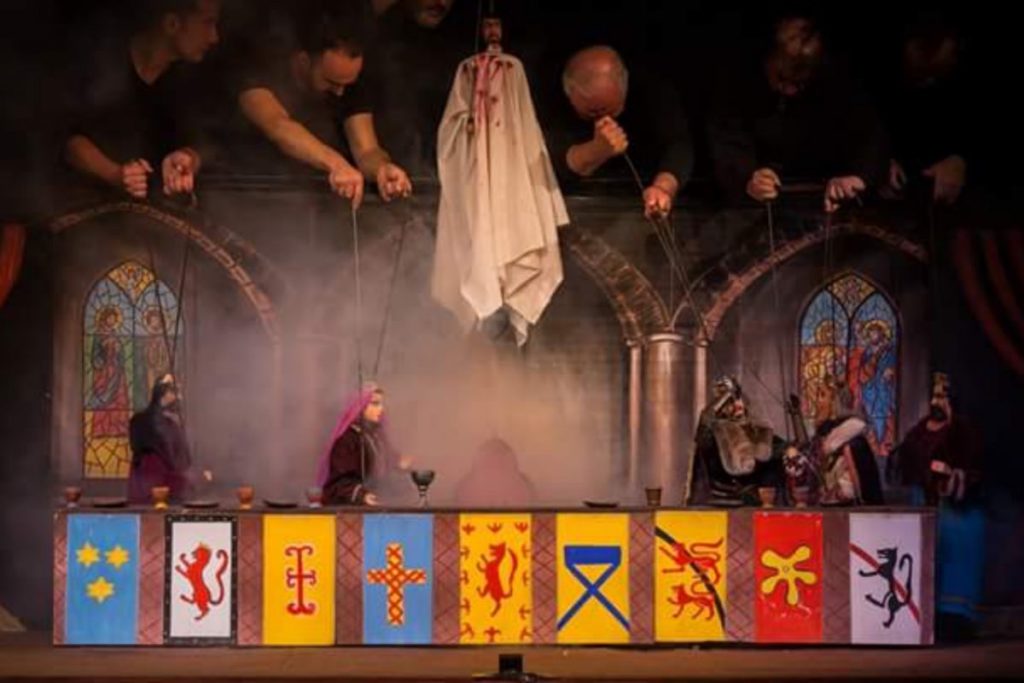
In the shop in Via Reitano, which was once also the family home – they build not only the puppets, but also sceneries, weapons, and other useful objects for the staging of a puppet opera. The Napoli brothers also make puppets on commission for collectors, and organize guided tours and workshops in their laboratory.