

November 8, 1934, was the day on which the famous Italian writer Luigi Pirandello received the Nobel Prize for Literature in Stockholm from the Academy of Sweden. These were years of great excitement and incredible literary and theatrical conquests for the writer, who was nominated for the Nobel “for his daring and ingenious renewal of dramatic and theatrical art”. They were also years of retaliation, among other things, after the traumatic experience of the Great War when Pirandello had been forced to have his wife locked up in an asylum (where she remained until her death) and to assist his son Stefano, who had been imprisoned by enemy soldiers during the battles and who only returned to Italy years later, seriously injured and debilitated.
The Nobel Prize to Pirandello

It can therefore be said that the theater was, for Pirandello, the spur that allowed him to concentrate and focus his attention on increasingly exciting projects, probably also to distance himself from the family traumas caused by the war. In 1925 he founded, together with his colleagues Ruggero Ruggeri and Marta Abba (his muse), the Compagnia del Teatro d’Arte of Rome, which led him to Hollywood where he found international success. But the versatility and singularity of the man Pirandello went beyond the theater and dramaturgy: great and prominent were also his political talents and his passion in taking a position, despite the fact that the government and history tarnished this côté in favor of the decidedly more striking attitude of his colleague, Gabriele d’Annunzio. Also a writer, he used to take advantage of his charm in a fascinating and wiser way, especially among the exponents of aristocracy, the only class that, in his times, could have a say and really ruled also the cultural world.
Pirandello: his life

Luigi Pirandello was born on 28th June 1867 in “Girgenti”, the name with which the city of Agrigento, in Sicily, was known in 1800. He had a comfortable childhood, thanks to the economic conditions of his family, who had been very successful in the trade of Sulfur, but also characterized by extreme communication difficulties, especially with adults. It was actually this difficulty, combined with his unusual character and love for literature he had developed during his high school studies, which pushed Pirandello to try and refine his vocabulary and his ability to express himself and his feelings. In 1892 he moved to Rome, living off the monthly allowances provided by his father. Here he married and started his career. In 1903, a landslide in the family sulfur mine left him penniless. The situation was exacerbated by his wife’s obsessive jealousy, which later resulted in more serious psychiatric disorders, causing him to experience a really dark period, also exacerbated by the World War.
Luigi Pirandello’s most famous works
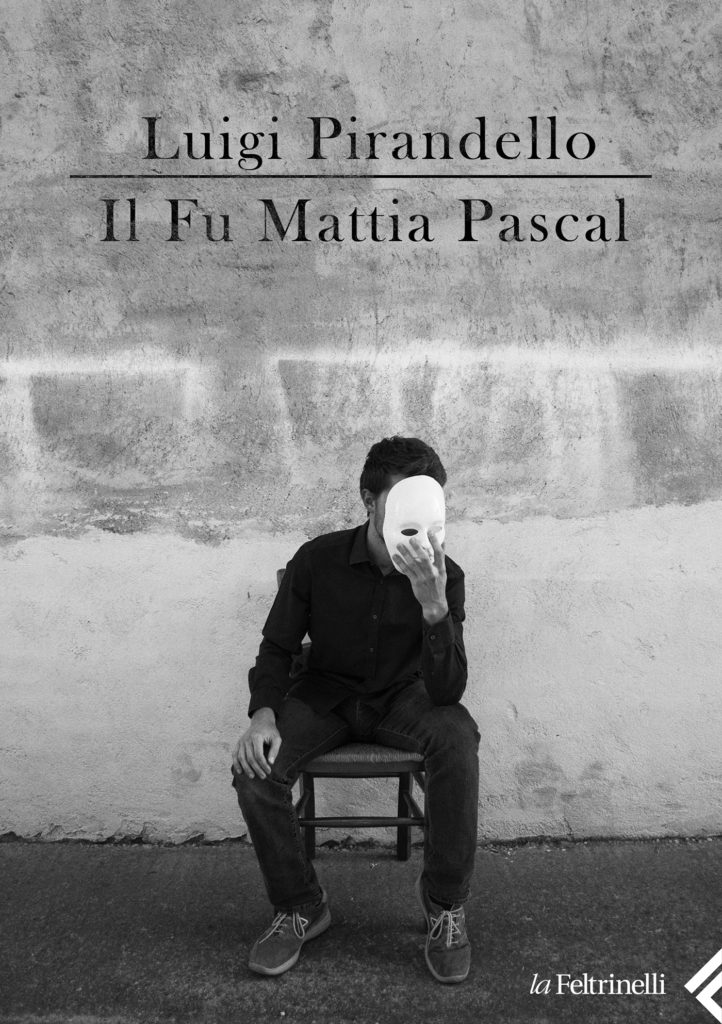
Among the most famous narrative works of the Nobel prize Luigi Pirandello we must certainly remember “The late Mattia Pascal”, focusing on his relativist philosophy, “One, None, and a Hundred- thousand”, the book of incommunicability par excellence that describes in detail all the inevitable communication difficulties between human beings.
Pirandello’s theatrical works can be divided into four phases:
- the first is the Sicilian one, dedicated to small works set in Sicily.
- The second is that of grotesque humor (it is said among other things that Pirandello was the inventor of black humor).
- The third is that of the “metateatro“, which slightly follows Shakespearean settings (with temporal leaps and use of multiple stages), to which we owe works such as Six Characters in Search of an Author and Henry IV.
- The last is that of the theater of myths, meager compared to the first three because the artist did not have enough time to develop this new and last stylistic dimension.
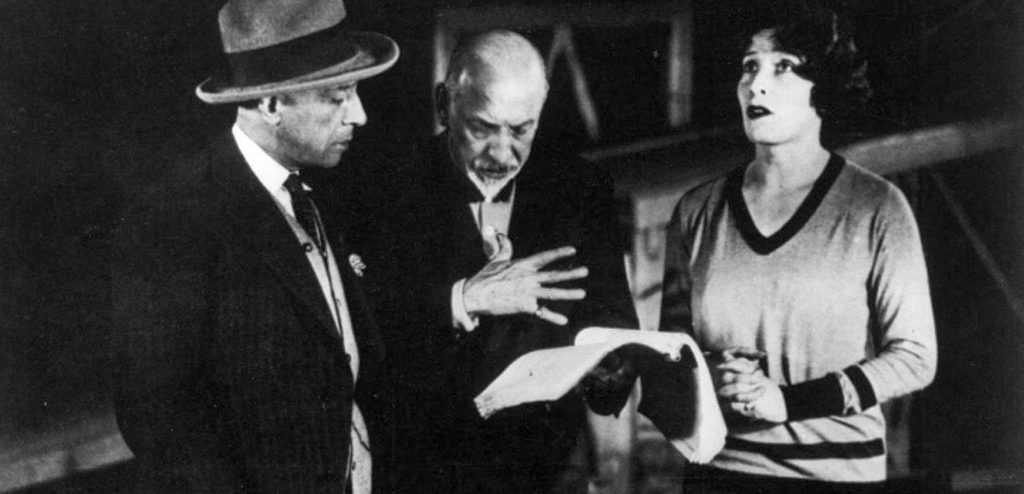
Pirandello at school, in cinema and in theater: today’s traces
The magnificence of the works by the Nobel prize Luigi Pirandello did not die with him, on the contrary, he continues to be the subject of scholastic and academic studies even in our day and age. His writings and his works have been mentioned and have been the driving force for the creation of other more current works countless times, both in the theatre and in cinema, although the artist did not look favorably upon modern cinema (he always considered it far inferior, in qualitative terms, to his beloved classical theater). Some examples? Kaos (1984) and You Laugh (1998), two film adaptations of “Novelle per un anno” and Six Characters in Search of an Author by Hugo Weisgall, lyrical re-adaptation of “ Sei personaggi in cerca di autore“, dated 1959.