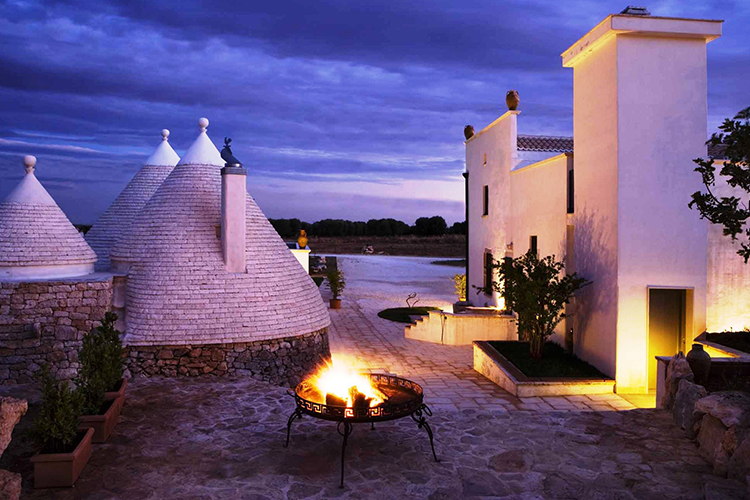
The Masseries were inhabited Tuareg ranchers, where obviously the master lived with his family, but the vast rural construction also included the lodgings of the farmers, a chapel, stables, warehouses for forage and crops. The ranch had the usual layout general of the house with farm buildings that are usual of the Mediterranean tradition: common features almost always include a fence, a tall, fortified wall, and one large central space even with the barnyard operation, overlooked the inputs of the various residence and work buildings. The most ancient ranches, date back to the thirteenth and fourteenth centuries, and often arise on the ancient Byzantine-era houses, retaining some parts, such as the towers for defense, up to 20 meters tall. The defensive system was very advanced and involved watchtowers at interval distances between one another, through which they could raise the alarm in case of the arrival of possible attackers and send it to the nearby ranches, in order to protect each other.

The term “masseria” (singular form of the plural masserie) is derived from “mass”, a word used by the ancient Romans, indicating an estate formed by large rustic aggregates. During the Middle Ages it did not lose meaning, but from the fourteenth century, the masseria becomes a place of agricultural exploitation managed by stewards (the “keepers” of the farm) on behalf of large landowners or ecclesiastical orders. However, many of themsoon became a royal property, regulated by special statutes. In 1443, with the reorganization commissioned by King Alfonso of Aragon, they were strategic points for the management of agricultural production, but above all the livestock traffic subject to transhumance. In fact, to recognize their peculiarities, three wee sheep ranches and others specialized in different types of agriculture, most of them specialized in the processing of agricultural products, among which stand out above all olive oil, fruit and wine.