

The basis of a good state of health throughout our life, among various recommendations, is to follow a balanced diet, perfectly embodied by the Mediterranean diet.
The benefits of this diet are widely demonstrated in the medical and epidemiological literature of recent years and tell us that, those who follow the principles of this diet, are more rarely affected by cardiovascular or cerebrovascular diseases, tumors, neurodegenerative diseases.
As a result, among people who rely on the Mediterranean diet the mortality rate is lower.
Does following the Mediterranean diet, therefore, increase longevity? Yes, as the results of research and studies show but not only.
A few weeks ago Antonio Rao, the marathon runner who, from the height of his ninety years, participated in the Rome marathon running for 42 kilometers in about six hours.
A force of nature, helped both by the race, his great passion together with the sea, both from his diet, made of simple and above all fresh food.

fanpage
How to follow the Mediterranean diet
Usually, when we decide to go on a diet, the first foods we sacrifice are carbohydrates: bread, pizza, pasta and potatoes are not included in a diet for weight loss.
What if we told you that, instead, the Mediterranean diet foresees carbohydrates as the main energy source and is considered by the WHO – the World Health Organization – the diet of longevity?
The results of a study published in The Lancet in 2018, which involved more than 15 thousand individuals between 45 and 64 years, showed that, the amounts of carbohydrates recommended by the Mediterranean diet correspond to the perfect caloric intake: In fact, both consuming less, and consuming more, are factors associated with higher mortality.
In fact, in areas of the world where life is longer, those who exceed the average age are lean subjects, accustomed to consuming carbohydrates in quantities ranging from 50% to 60% of their diet.
For example, in Japan, in Okinawa, people consume almost 60% of low glycemic index carbohydrates therefore, potatoes along with vegetables and legumes, soybeans; in Ogliastra, in Sardinia, individuals consume a percentage of carbohydrates ranging from 62% to 67%, consisting mostly of durum wheat, barley and potatoes.

lacucinaitaliana
Mediterranean diet: indications on quantities
Having established that the basis of the Mediterranean diet is carbohydrates and vegetables, it is now important to understand what amounts are recommended by specialists.
Carbohydrates should make up from 45% to 60% of the daily calorie requirement: among these, simple sugars can represent a maximum of 15%.
If we want to give a form to these indications, we could say that the diet of an adult who does moderate physical activity and consumes about 2,000 kcal per day, should consist of 275 grams of carbohydrates, of which at most 75 of simple sugars.
The carbohydrates provided by the Mediterranean diet are those with low glycemic index and rich in fiber; alternatively, they should be combined with an amount of vegetables that can calm the glycemic peak after the meal.
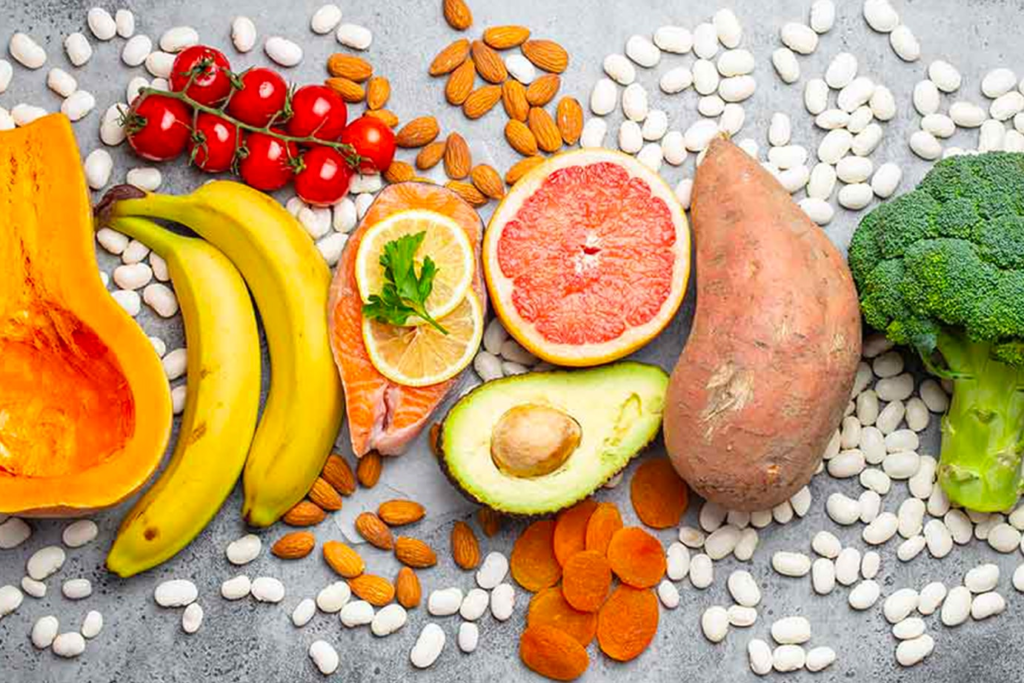
Then, always according to the diet of longevity, we should consume every day two portions of fruit, each of 150 grams, and three of vegetables of 200 grams each or 80 grams when it comes to raw leafy vegetables.
succhiyoga
The dangerous modern drifts of the Mediterranean diet
Like everything else, the Mediterranean diet has changed over time but, in this case, it is a negative change that has distorted this diet, giving it a new interpretation that does not correspond to reality.
If it is true that the Mediterranean diet is based on carbohydrates, it is true that not all sources of carbohydrates are equal: a cereal is not equivalent to a pizza, a simple carbohydrate is not the same thing as a processed carbohydrate, and so on.
These customizations of the Mediterranean diet have led to an excess of bread, sandwiches, pasta, pizza, potatoes and protein, in adults and children.
One of the most common habits in Italy, for example, is to eat pasta and bread at the same time and, at the end of a meal, exaggerate with fruit because they are convinced that it is a healthy way to appease the sense of hunger.
These are not healthy habits and have nothing to do with the Mediterranean diet.
What should we do to eat according to the real principles of the Mediterranean diet?
Reduce meat and cheese, pasta and bread, rice and potatoes. Vary the choice of vegetables and include cereals and legumes, still little consumed on Italian tables. Eat fruits and vegetables according to the quantities indicated by the Mediterranean diet.
Season with Evo oil, drink plenty of water and a glass of wine at the table when you feel like it.
Copertina: liltpalermo